











Homemade Skin Care Remedies for All Skin Types
Skincare doesn’t have to be expensive and fancy to look and feel great. Even if you learn simple homemade skin care remedies you might be able to help keep your skin clean, soft, and fresh. By doing the right things, you may establish a skin care plan that meets your requirements without spending a lot of money.
But each person has unique skin. Some individuals have a dry complexion, others have oily or even sensitive skin. That is why it is so important to be careful when selecting homemade skin care remedies. An ingredient that works for one person could irritate another.
This guide will give you information about the easy homemade skin care remedies, the different type of skins, and the things to avoid for healthier-looking skin.
Why bother with homemade skin care remedies?
A lot of individuals like to use basic extracts for skin care. Macadamia nuts, oatmeal, aloe vera gel, and even plain yogurt is frequently incorporated into skin care products.
These ingredients can soothe or soften, depending on your skin type and the product. They are also widely available in many homes.
However, the idea of natural is not always a safe one. There are some kitchen ingredients which can irritate the skin or cause allergic reaction. Many of the tested skin care products also have preservative that is not found in homemade mixture.
As a result, spare your schedule and select your ingredients carefully.
1. For calm and fresh-looking skin, use Aloe Vera Gel.
People seeking a light and soothing skin care option often opt for Aloe Vera gel. It can ease any mild skin irritation and give a feeling of refreshment.
**How to use it:**
– Opt for simple aloe vera gel formulated for skin care purposes.
– Dispense onto the cleaned skin in small quantity.
– Leave on, as the products indicate.
– Discontinue use if you experience itching, redness, or burning.
Don’t use fresh aloe vera from a plant with care. The yellowish liquid found near the outside of the leaf can cause skin irritation. If it’s tested and unscented, it may be a safer choice.
For some individuals, Aloe vera can be useful on oily and dry skin, but it doesn’t cure acne or skin conditions.
2. Dry or sensitive skin can benefit from an oatmeal treatment.
Oatmeal is helpful when making product for tender skin. Colloidal oatmeal is frequently utilized in skin care products because it is specially formulated to dampen dry, itchy skin.
A simple oatmeal paste can also be made at home.
**How to make it:**
– Grind plain oats fine.
– Add a little of it to warm water.
– Strengthen and protect the skin by doing gentle massage on moistened skin.
– Rinse without rubbing or scrubbing.
Avoid scrubbing your face with large chunks of oatmeal. Scrubbing may irritate the skin, particularly if it is already dry or sensitive.
If the skin is sensitive, a fragrance-free oatmeal-based product might be a safer option for a homemade recipe.
3. Use honey for a soft skin feel.
Face masks often use honey because it keeps water on the surface of the skin. Kitchen honey seems to do no good on skin conditions, dark spots, and acne as yet, however.
**How to use it:**
– Obtain a small quantity of plain honey.
– Apply a small amount to a small area of healthy skin.
– Keep it on for several minutes.
– Rinse thoroughly with lukewarm water.
If it is known that honey causes allergy symptoms, do not use it. Do not use homemade masks if the skin is broken or infected.
If the skin turns red or itchy, discontinue the mixture.
4. Select Skin Care Remedies for Your Skin Type
The best homemade skin care remedies are those that your skin feels and responds to.
For Dry Skin
Dry skin can be tight, rough, or flaky. Use face wash gently and leave your skin slightly soapy, then apply a moisturizer containing no fragrance.
While the homemade mask can feel good, it cannot be considered better than an effective moisturizer. Please note that lemony-scented products, rough scrubs and hot water may aggravate dryness.
For Oily Skin
The skin is frequently oily and shiny along the forehead, nose and chin. Gently wash face twice daily and after heavy perspiration.
Select an oil-free, non-comedogenic moisturizer. This implies that the products are formulated so that they do not clog up pores as easily.
Do not use rough materials to scrub out oil. Excessive scrubbing can cause abrasion of the skin without resolving the issue.
For Sensitive Skin
Sensitive skin can be very reactive to new products or ingredients. Practice simple skin care and stick to skin care products that are not scented.
Oatmeal skin care products may make some people feel more at ease. But make sure to always test new products first in a small area.
Do not use harsh home remedies, essential oils, or brushes for the face.
For Combination Skin
Combination skin tends to get oily on the forehead, nose and chin and normal or dry on the cheeks.
Cleanse and use a light moisturizing lotion. Moisturiser may be used in spots, if necessary, but in a mild amount.
No separate homemade mask per-day is necessary. A basic procedure which keeps skin comfortable is typically easier to follow.
5. Do not forget sunscreen
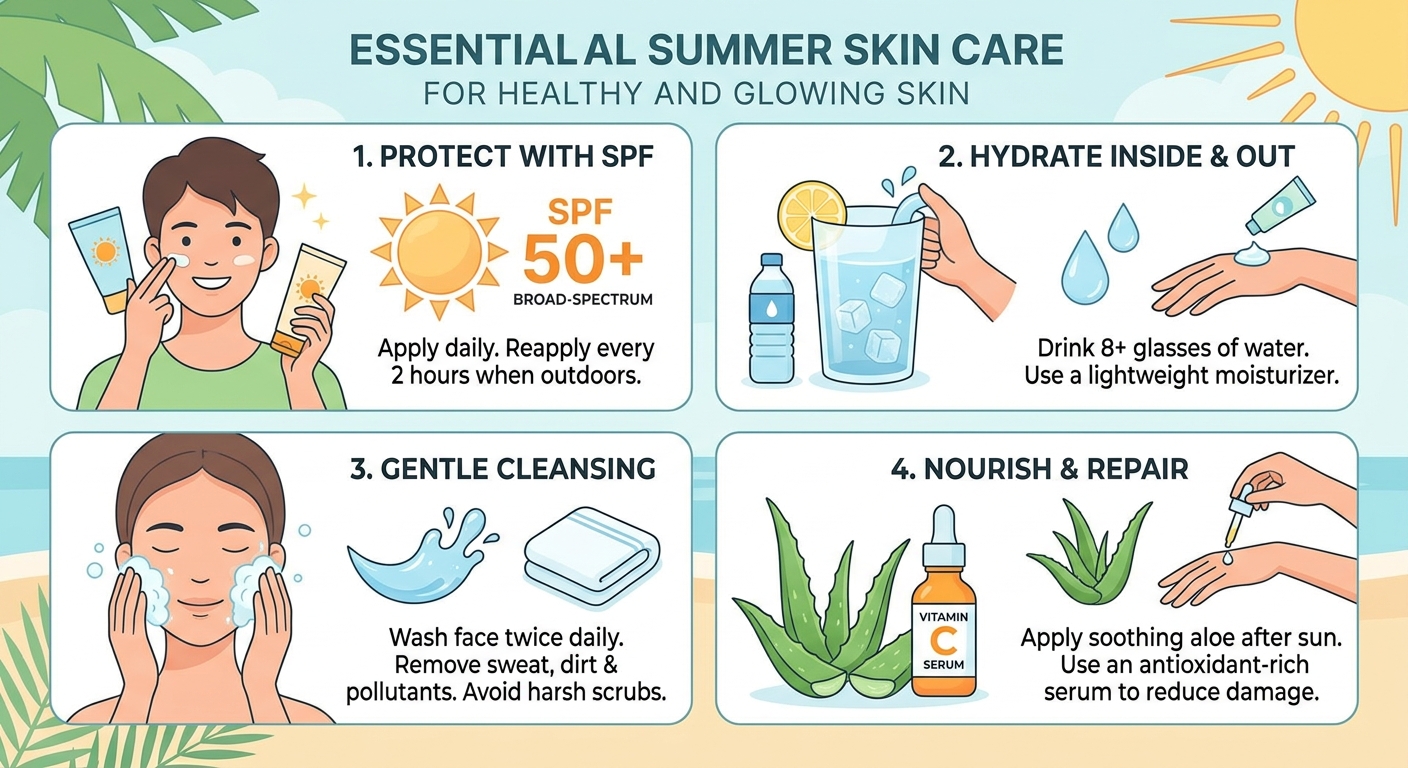
No skin care product, even the best at home concoctions, can out-do sunscreen. Sunlight can lead to sunburn, dark spots and skin aging.
Apply a broad-spectrum sun block at least SPF 30 daily. Use it before leaving the house, and again as stated on the label, particularly after working out, swimming or wiping your face.
Use a sunhat and avoid the sun when it is strong. Over time, these little steps help to protect your skin.
6. Natural Alternatives to Skin Care Products
There are some common house care hacks that might actually cause damage. Exercise moderation with the ingredients:
Raw Lemons: They can contain a high concentration of citric acid which will irritate the skin and make it more sensitive to the sun.
Baking soda: Baking soda because it may harm the natural barrier of the skin.
Toothpaste: Whether you’re cleaning your teeth or your face, toothpaste can cause irritation.
Sugar scrubs: Rough particles can cause tiny areas of irritation, especially on sensitive skin.
Strong essential oils: Pungent essential oils may cause allergies or irritations to skin.
More ingredients are not a guarantee of better results. Often gentler care is preferable.
7. How to Make Your Skin Look Young and Fresh Naturally
Homemade skin care treatments are just one component of a wholesome skincare regimen. Everyday habits are significant, as well.
– Consume water frequently throughout the day.
– Increase intakes of fruits, vegetables and other healthy foods.
– Spend the right amount of sleep for your age and needs.
– Wash face softly after sweating.
– Do not twist or squeeze pimples.
– Utilise a clean towel and ensure your skin care equipment is clean.
These habits shouldn’t solve all your skin issues, but they can help maintain the health of your skin.
Final Thoughts
Some of the best and easiest homemade skin care remedies are also inexpensive. The most common are aloe vera gel, oatmeal, and honey; however, some people may find these ingredients unsuitable.
Begin with a basic routine, use mild products, and keep an eye on your skin. Always test new ingredients before applying them to the face.
Note that flawless skin doesn’t require a lot of cosmetics. Simple washing, daily moisturizing measures, sun protection, and sometimes tolerance are the most helpful remedies.
Seek advice from a qualified healthcare professional, rather than only using remedies at home, if you have a rash, a persistent acne issue, or dry skin irritation.

2 thoughts on “Homemade Skin Care Remedies for All Skin Types”
Comments are closed.