










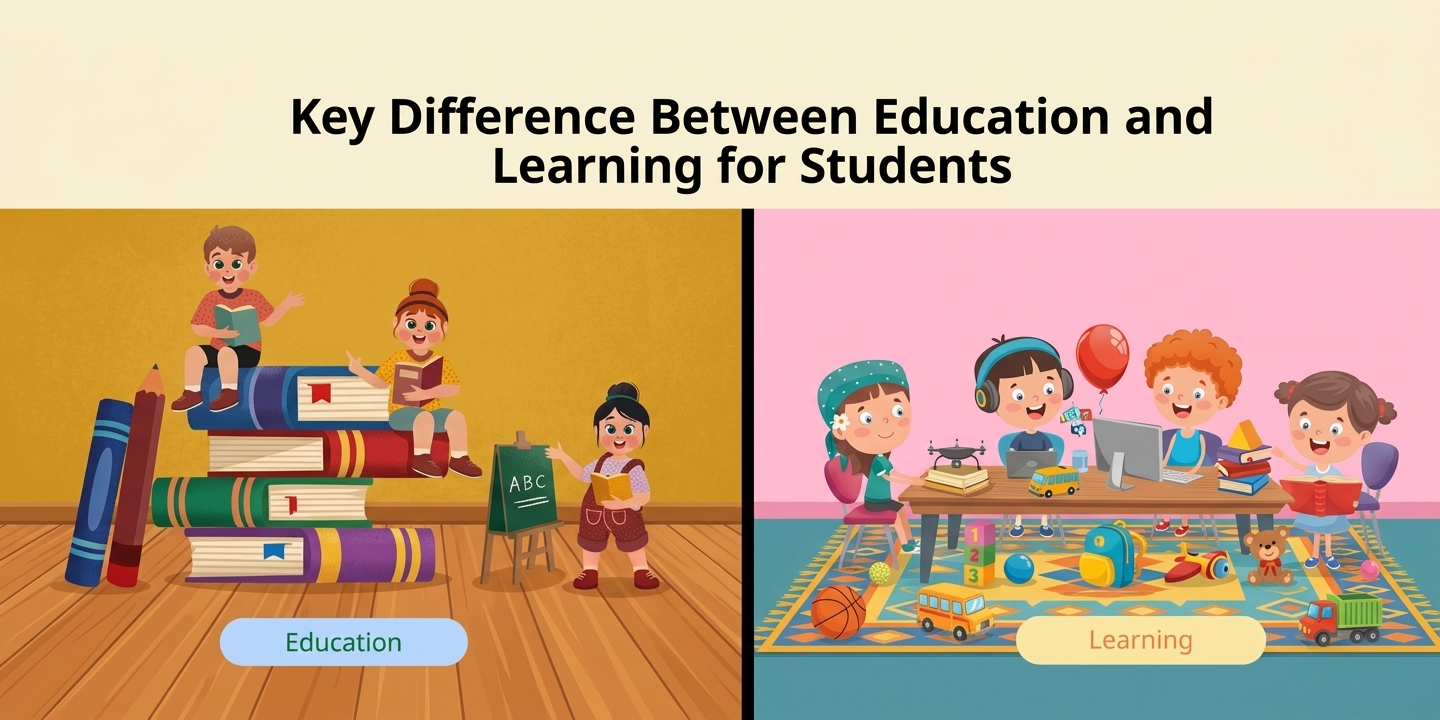
The difference between education and learning; understanding how children grow and learn.
Even while there may be close relatedness between education and learning, they are not selfsame. Education is typically associated with lessons, books and teachers. Learning occurs when new knowledge or a new skill is acquired and when it is practiced and acquired through action-learning, as part of daily life.
Children learn in diverse ways. They learn at school, at home, in play, and from others. Knowing the distinction in between education and learning may help parents to aid their youngsters’ growth.
What Is Education?
Education: Teaching children knowledge and skills. It is a process that frequently occurs in a school setting with teachers leading children in various lessons.
Children study subjects like English, math’s, science and History. They are also taught to cooperate and abide by the rules as well as having the spirit of respecting others around them.
But, learning isn’t just about books and tests. Parents and family members can educate children in proper manners, being kind and responsible persons.
When parents share lessons about sharing and caring for another, for instance, they are teaching important lessons in life.
Education, in very basic terms, is the process of knowing, hence, equipping children for daily life.
What Is Learning?
The definition of learning is gaining in knowledge or skills built up by study, practice or experience.
Each day is a learning opportunity for children. They can develop basic number skills by playing with toys or make observations about plant life in the garden while helping parents.
They also learn through questioning, observing and self-exploratory activity.
For instance, a child can learn to ride a bicycle by practicing. The child could learn this skill if no one needed to give him a classroom lesson.
Learning is not limited to classroom time and should not end at the end of the school day. Individuals continue to learn throughout their lives.
Education, what is the difference?
Education and learning go hand in hand but there are also some very definite differences between education and learning.
1. Meaning
Education is most often a deliberate method of teaching children. Learning is the activity of getting to know (understanding) something new or learning a new skill.
For instance, a teacher can describe the growth of plants. Learning has occurred when a child comprehends the lesson.
2. Where They Happen
Learning is commonly conducted in learning institutions and classrooms. Learning can occur virtually anywhere.
Learning takes place at school, at home, in the playground and even in our everyday routine.
For instance, by assisting a parent in the preparation of food, a child can learn to count items, explore shapes and various ingredients.
3. How Children Learn
Typically, education means teachers and books and lessons and activities. Students can learn both in the presence or in the absence of a teacher.
A child can read and learn a word in a book. They can also acquire new vocabulary through interactions with family members or friends.
Both methods teach children’s about the world in which they live.
4. Tests and Progress
To see what children know, often schools will have homework, class work, and testing.
But not everything that is learned counts in marks. A child can demonstrate learning through a problem solution, an explanation, or by being able to complete a task independently.
Parents need to take this into consideration and not just look at an exam score to make a judgement about a child’s learning.
5. Rules and Freedom
Teaching and learning frequently happens in the context of a lesson plan or time schedule for a school. Learning and approaches may be more flexible; may be more child’s choice.
For instance, kids learn about animals in a science class. A child could find out still more by reading a book about the animals, observing the birds, or visiting a zoo at home.
Children can learn during both adult-led lessons and during free exploration.
Why is it so important that children are educated and learn?
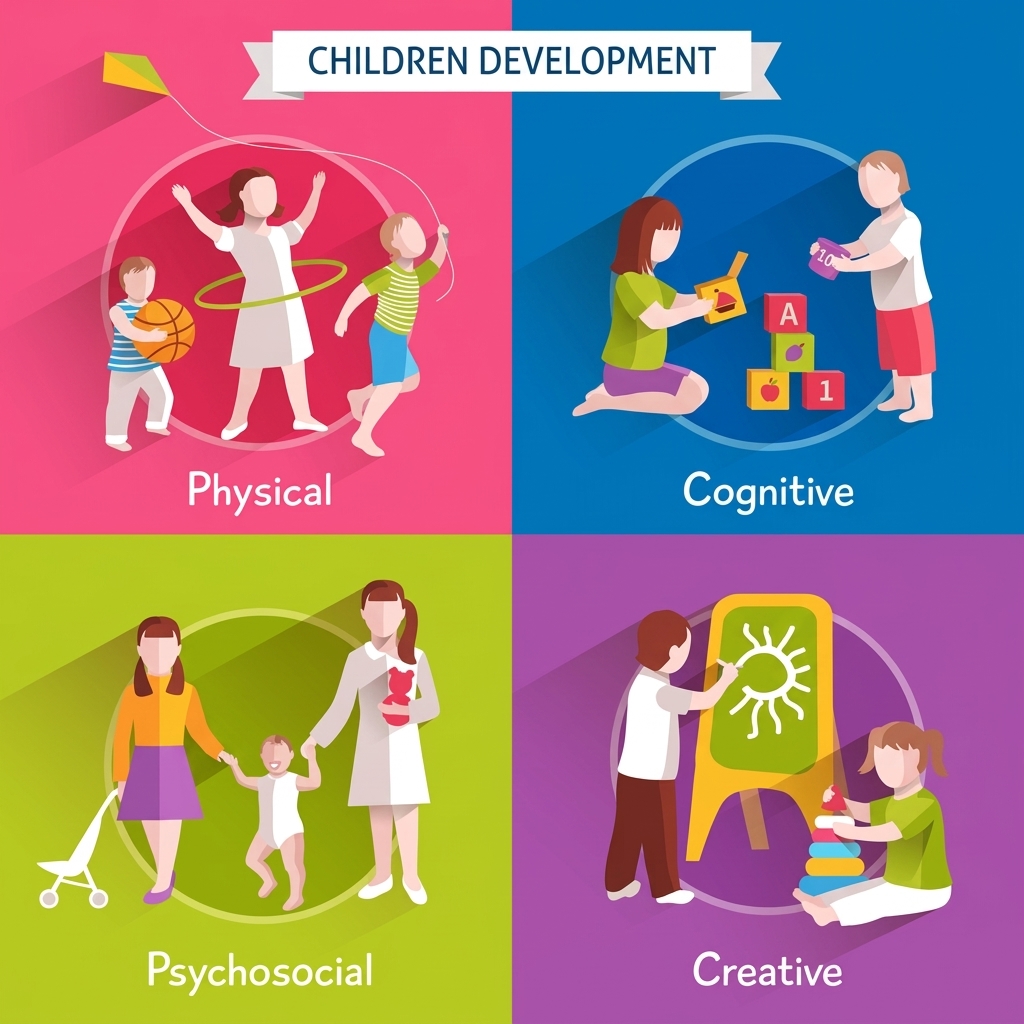
Education and learning play a key role in the growth of the children in many ways. They construct knowledge, enhance everyday abilities and assist children to get in touch with their emotions and also the people within their surroundings.
They Encourage thinking in children
They promote the ability to think for children.
Children are taught to make decisions, formulate questions and solve problems.
Children can think and find answers in simple activities like puzzles, building blocks and matching games.
They help to develop communication skills
They boost up the Communication Skills.
Children learn new words from reading books, discussion with parents and by spending time with friends.
These also enable them to express their ideas, thoughts and emotions about the activity.
They Encourage Creativity
Children have opportunities to use their imagination through drawing and painting, singing and through pretending to play.
They are able to investigate and come up with alternative solutions.
They Help Children Build Friendships
They enable kids to make companions!
When children play with others, they learn to play socially.
They learn to share, take turns, listen and solve minor problems. These skills can aid them in the development of healthy friendships.
What are the ways parents can assist children’s learning at home?
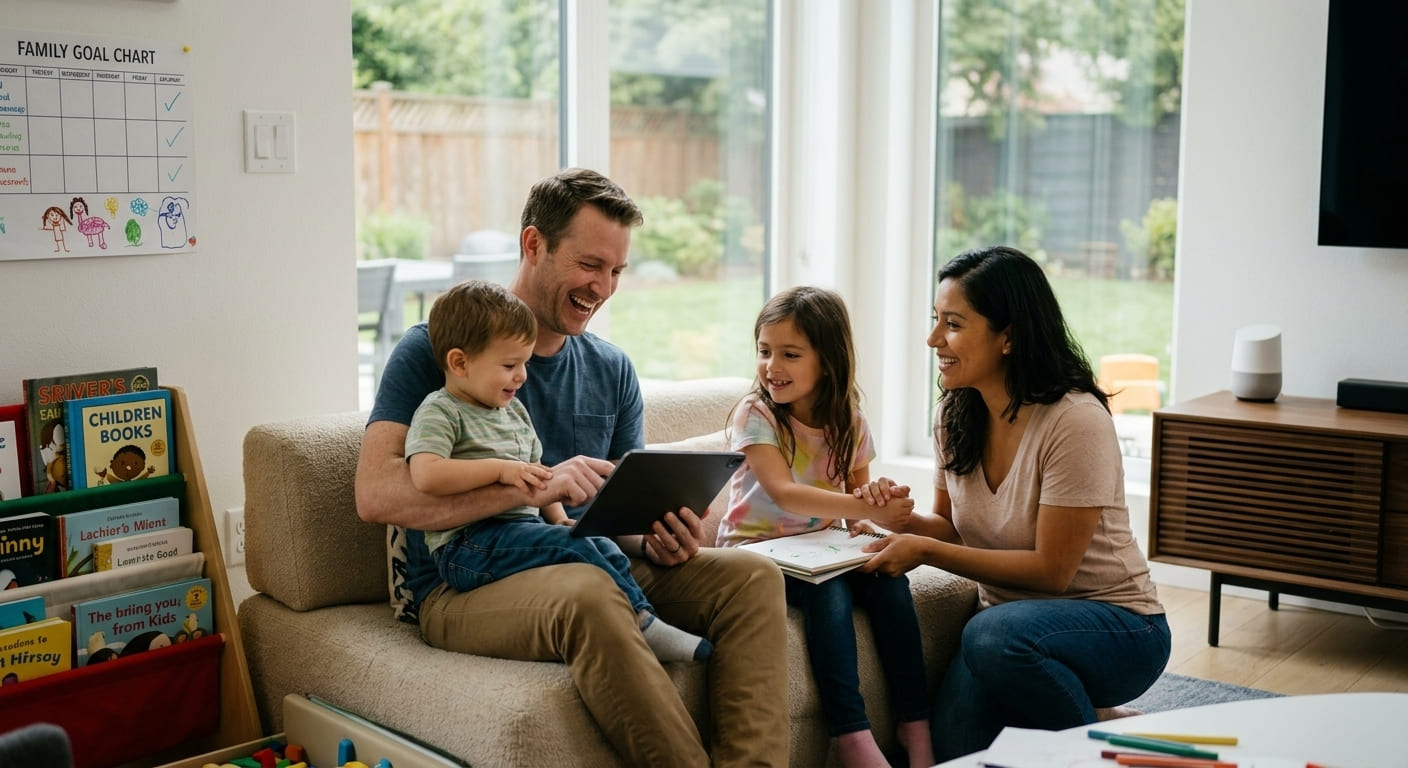
Parents’ involvement is very significant in their child’s learning. Dollar store toys and other special learning equipment are not needed. Sometimes it takes simple lifestyles to bring a great difference.
Read books together: Select “simple storybooks” and discuss the illustrations. Have your child predict what will happen. This can make reading more fun. This can make reading more fun.
Learn through play: Children will learn through play as they engage in puzzles, blocks, drawing and simple games.
Answer their questions: Be sure to answer their questions. Kids like to ask questions. Answer simple questions they pose. If they don’t know the answer, see if they can find it out together.
Include them in daily tasks: Involve them in daily activities. Have your child water plants, sift through toys, or count items of food (with fruit, for example). These are the building blocks which can be used to learn valuable skills.
Praise their efforts: Reward their efforts. Support your child’s efforts as he/she is trying a new skill. Inform them that it’s okay to make mistakes – it’s part of learning.
Most importantly, provide adequate learning time for your child. Each child has various interests and learns at their own rate.
How is it that teachers are able to support children’s learning?
Children are supported in their learning, through lessons, classroom activities and group work.
They discuss new concepts, respond to queries and assist the kids if they have an issue. The teachers also observe children’s learning and provide help as appropriate.
Effective learning is not simply about the attainment of high marks in children. It also provides them with opportunities for questioning, sharing ideas and problem solving.
Parents can contribute to this process by engaging teachers in conversations and queries relating to their child’s development.
Parental/teacher collaboration enables children to receive enhanced support in their school and at home setting.
Why Children need Education as well as Learning?
For the all-round development of a child, both education and learning are significant.
Learning (school) provides children with opportunities to pursue new topics. Learning makes them to understand the above subjects and also apply what they have learnt in real life.
For instance a child could learn about plants in the classroom. They can then water a plant at home later and observe the plant’s growth.
This allows them to relate information learnt in the schools with the information in their immediate environments.
Children require more than just a book and curriculum. They also need time to play, ask questions, explore and practice new skills.
Conclusion
It helps for parents to understand the difference between education and learning and help support their child.
Education can occur during school hours in a conscious and deliberate manner whilst learning occurs through students’ experiences, practice, play and study.
Both offer support to the child to acquire knowledge, develop skills and to make sense of the world around them.
As a parent, you can make learning a part of everyday life. Sit down together and read, play the simple game and answer questions, encourage your child to try different things.
Keep in mind children won’t learn it all in one day! They can continue to learn new things each day with time, practice and support.
One thought on “Difference Between Education and Learning in Children”
Comments are closed.