










Titanic Ship Lifestyle: A Look Inside Life on the Famous Ocean Liner
People around the world remain interested in the Titanic ship lifestyle. The famous ship was popular for its huge size, elegant suites, luxurious restaurants, and varying comfort levels. Some lived very rich and comfortable lives, and others in simple rooms with fewer facilties.
On the 10th of April 1912, the RMS Titanic set sail for its first journey . This ship had set sail from Southampton, England, en route to New York City. The ship was filled with rich families, laborers, children, and those who wanted a fresh start in America.
The people on the Titanic lived different lives. The first class received luxury, the second class received comfortable accommodation and the third class received simpler accommodation. Through the Titanic ship lifestyle we get a view into how people travelled, ate, relaxed and spent time at sea more than a century ago.
1. What Was Life Like on the Titanic?
The Titanic was one of the most well known passenger ships of its era. It was designed to transport passengers across the Atlantic Ocean in comfort. There were sleeping rooms, dining rooms, lounges, a swimming pool, and a gym on the ship.
But it was not everyone equally comfortable.
The Titanic had three main classes of passengers. Every class had their own rooms, meal rooms, and common spaces. Passenger space was frequently contingent upon ticket cost.
The highest class of passengers received the finest accommodations and services. Second-class was cozy, but cheaper. Third class passengers were assigned simpler rooms and shared facilities.
Although they all experienced different avenues, they all belonged to one great historic journey.
2. First-Class Lifestyle on the Titanic
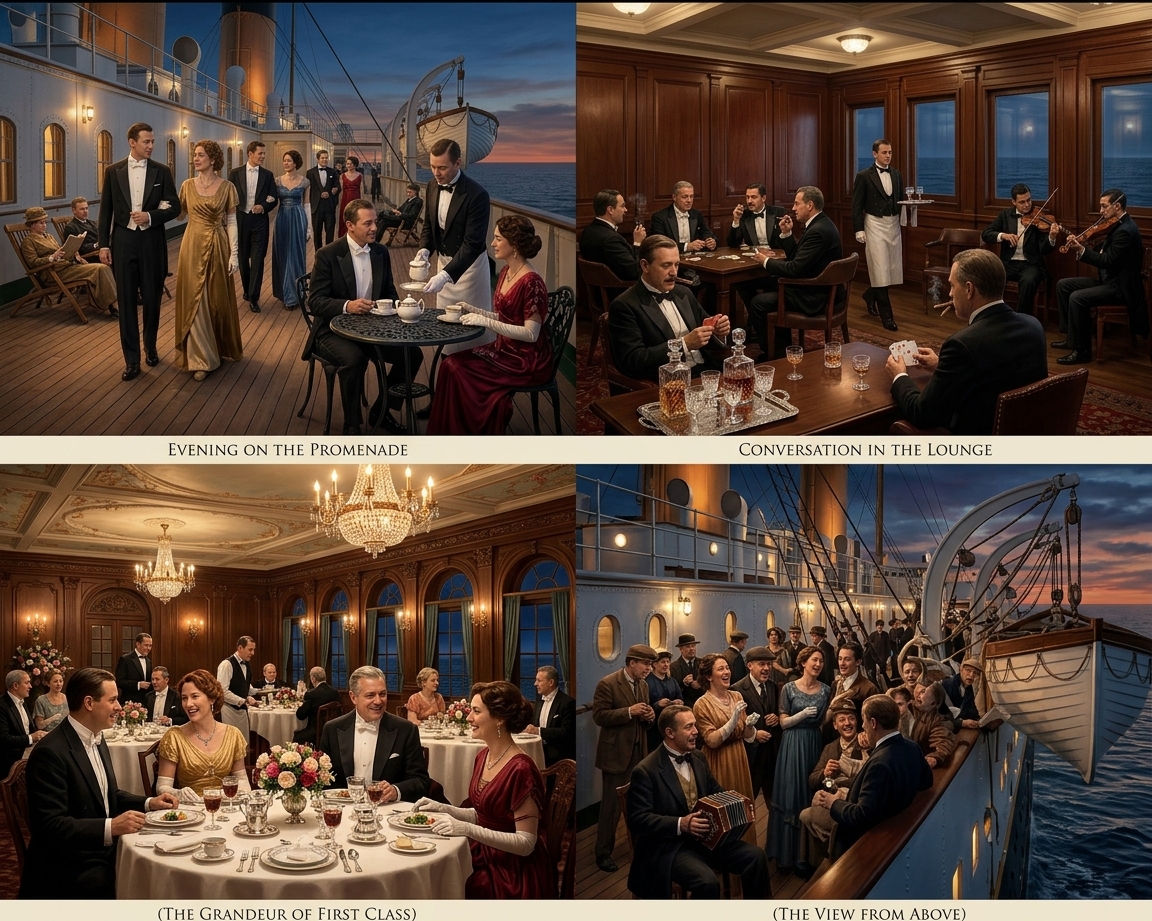
Life was meant to be comfortable on the Titanic. For rich visitors, there were spacious rooms, delicious dishes, grand furniture, and beautiful communal areas.
First cabin suites included some suites with private bathrooms and separate sitting rooms. The most expensive suites provided additional comfort and space. These areas were created so that a passenger could feel like he was staying in a luxury hotel.
The Titanic featured a grand staircase, one of the most famous features. It had a large clock, wooden work and decorative ironwork. It became a symbol of the ship’s elegant design.
There were also lounges and smoking rooms and reading rooms for first-class passengers. Certain sections were designated for men, and certain sections were designated for women, continuing with the social codes of the day.
The titanic ship lifestyle wasn’t just a way to get to a different country for the lucky passengers. The ride was part of the adventure.
3. Second-Class Life on the Titanic
The 2nd class amenities were decent and not so expensive as the first-class. Many of their rooms were clean, furnished, and could be fit for a long trip, though their rooms were smaller.
Twos and fours occupied some cabins. There were also shared bathrooms and a dedicated dining area for passengers.
Mornings, lunch, and evening meals were served in a comfortable dining room with regular service. People could sit together, talk about their lives, meet people from all places.
They may also be allowed to pass time in a reading room or common area. Many passengers used the trip as a pre-American vacation.
The Titanic’s second-class accommodation provided a combination of comfort, social opportunity, and utility. It was inferior to first class and yet provided more room and privacy than many third-class layouts.
4. The life of the lower third class on the Titanic.
Because they wanted a better future, third-class passengers, or steerage passengers, would travel. Many were immigrants seeking an American destination for work, to join family, or to pursue a new life.
They had simpler rooms than other classes. A few of the cabins were shared by multiple passengers and the wash and water levels were often communal.
Third class, however, was not the same as sleeping in an open cargo area. Third-class passengers were entitled to proper sleeping quarters and seating areas.
The third-class dining room onboard would provide a communal eating experience for passengers. Food was provided on the journey to and from the ship, although meals were more basic than those would have been for first-class passengers.
For many families, the journey became an essential part in creating a new starting place. They carried their wishes, possessions, and American dreams.
The Titanic ship lifestyle for third-class passengers was less luxurious, though the trip was very important to them.
5. Food and Dining on the Titanic
On the Titanic, food was a central feature of everyday life. The ship was also equipped with separate dining rooms for different classes of passengers, and the quality of food served was different depending on the ticket holder’s class.
Several courses were available for guests who rode first class. They served soups, fish, meat, vegetables and desserts. The setting was often elegant with care taken to the presentation of the meals.
Second Class also had a dining room and a selection of meals. Their meals were simpler, but manageable.
The third class meals were utilitarian and basic. Passengers were fed together in communal areas.
There is more to dining than just the food. It was also a time for conversation, meeting fellow travelers, and storytelling. These meals provided an element of routine for passengers going for many days.
The contrast between the dining rooms illustrated the social gap between the three classes in 1912.
6. Entertainment and Activities on the Titanic Ship Lifestyle
Travelers had to have something to do all the way home. The Titanic provided varying activities, which, again, varied based on the passenger’s class.
A gym, swimming bath, Turkish bath, and other recreation services were available for “first class” travelers. They might even read, chat to friends, listen to music or relax in lounges.
Another popular activity was walking through the open decks. The passengers could enjoy the sea air, seeing the waves, and looking out to the ocean.
Passengers of the second class travelled in separate rooms together, wherein they were able to read and bring together. Third-class passengers could sit and chat and listen to music in shared spaces, as well as seeing family members.
Children might spend time with families and visit appropriate regions of the vessel.
There wasn’t equal entertainment, but there was one way to make the time pass for all classes. There were quiet moments, and there were social moments, on the Titanic.
7. What Was An Average Day On The Titanic Like?
The daily routine for the passengers aboard the Titanic varied according to their class, preferences, and purpose of the voyage.
Getting up, washing, and taking breakfast were routine early morning activities. Then passengers could sunbathe on deck or chat with others or chill out in their rooms.
People sat in class dining rooms about lunchtime. Some passengers went back to their cabins after the meal, others walked around or read in the ship’s common areas.
Meals were an integral component of the day, particularly dinners for first-class passengers. They were able to do this at formal meals where they could dress up, meet other travelers, and eat food that had been prepared with great care.
Evenings may involve discussing topics, playing music, reading, and quiet family time.
Daily life for a third-class passenger was often more about eating, sleeping, family, and preparing for when they reached the United States.
These daily routines made the Titanic seem like a miniature mobile community. People of all races were on the same ship, but they didn’t have the same experiences.
8. The People Behind the Titanic Ship Lifestyle
The Titanic was not just a ship loaded with passengers. Hundreds of crew officers laboured to keep it operating.
The complement of engineers, cooks, stewards, cleaners, officers, and many others. They worked as cooks, cleaners, engineers, sailors, and cabin stewards.
The engineers were working in places most passengers never went. Cooks managed the kitchen and stewards assisted passengers with their needs.
The daily life of the ship relied on these folks. Many crew members were working energetically behind the scenes while passengers were resting or eating.
They remind us that this ship-style life was not only made up of shabby rooms and gilded meals of the rich passengers of the Titanic, but of many others who made that life possible.
9. The Final Voyage of the Titanic Ship Lifestyle
The Titanic departed from Southampton on 10 April 1912. It made landfall at Cherbourg, France and Queenstown, now Cobh, Ireland, before crossing the Atlantic Ocean to New York.
They crashed into an iceberg on the 14th of April. It sank in the early hours of the morning of April 15, 1912.
Over 1500 people perished, making it one of the most memorable maritime disasters. Not enough lifeboat spaces were on the ship for everyone.
The catastrophe was a paradigm-shifter concerning the safety of passenger vessels. It also raised awareness about lifeboat rules, emergency planning and safety at sea.
Today, the Titanic is remembered not just for its scale and opulence, but for the people and lives that were transformed on that voyage.
10. “Why Is the Titanic Ship Lifestyle Still Popular Today?”
After over 100 years, people are still interested in what life on the Titanic was actually like.
One factor is its design. It offers a beautiful glimpse into early 20th century sea travel through its grand staircase, dining rooms, cabins, and shared areas.
The other is the passenger class distinction. Looking at the Titanic, you see how money and social rank impacted daily life at that time.
Passengers and crew members’ narratives also catch interest. There were families coming to America, wealthy people taking a holiday, and workers who were working on the ship, all of whom had different reasons for their presence.
These stories have been lives by books, films, museum displays, and historical records. They let new generations learn about the people who sailed on the famous ocean liner.
Conclusion
A Titanic ship lifestyle included luxury, comfort, simple living, and hard work. The bedrooms for first class passengers were luxurious and the lavish feasts served upon the tables of hospitality were equally rich, whilst for the second class passengers a comfortable car was provided for the journey. Third-class passengers hoped for a better life in America.
The men who worked daily to maintain the running of the ship were behind these various experiences.
The Titanic was far more than a famous ocean vessel. People of different cultures came together to make history there. The Titanic and research into the lives of the people on board the ship gives us insight not only to ship construction, but to the people, hopes, and social distinctions that existed during that era.
One thought on “Titanic Ship Lifestyle: Life on the Famous Ocean Liner”
Comments are closed.